Why Restaurants Stop Treating Kiosks as “Just Technology”
Real stories from restaurants that discovered what customers actually want

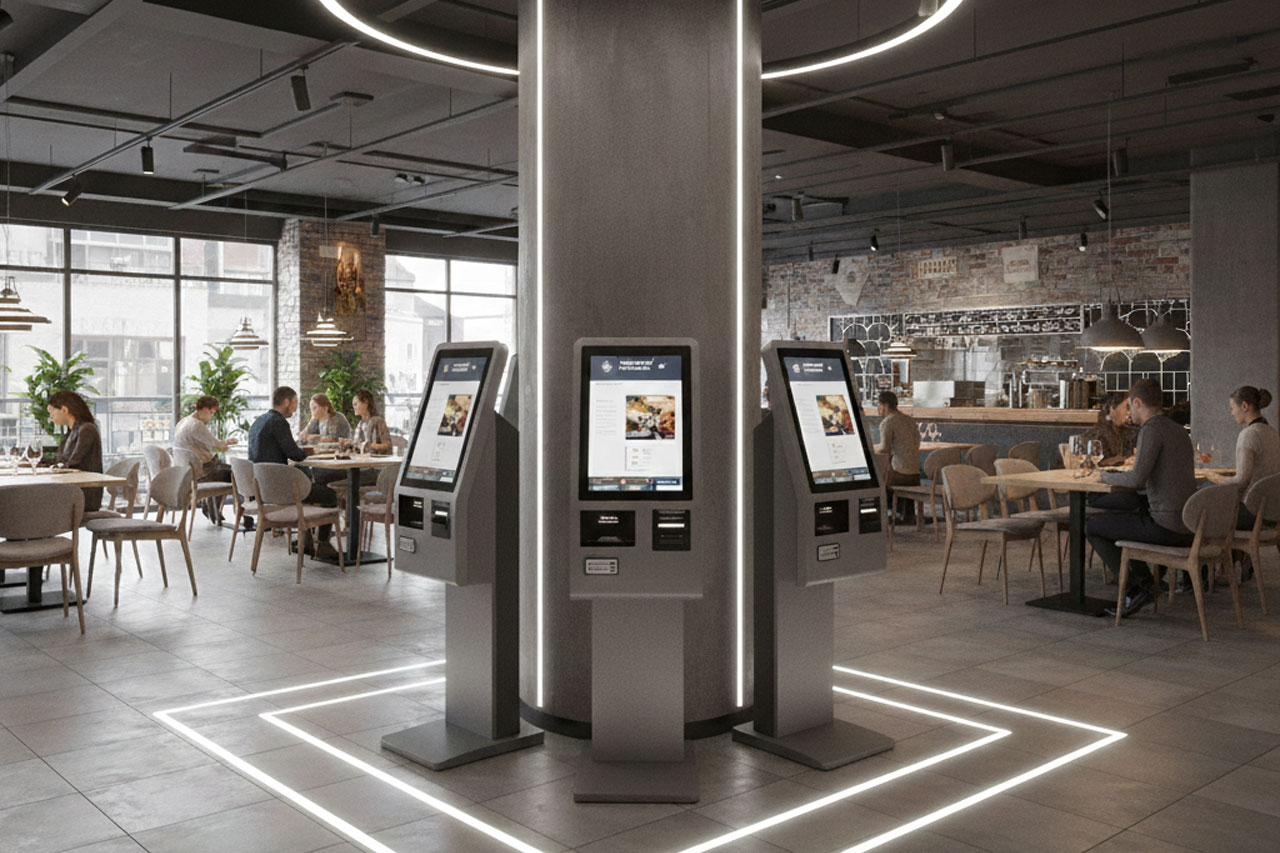
Photo by Eatery Club
Key Takeaways:
- Order errors drop 85% when customers input their own preferences
- Peak-hour capacity increases by 30-80 customers without adding staff
- Hidden savings emerge: reduced training time (60 hours per employee), lower theft ($500/month), zero menu printing costs
- Customer data becomes a goldmine: behavior patterns that drive targeted promotions and menu optimization
I used to think self-service kiosks were just fancy gadgets—something trendy that big chains like McDonald’s use to look modern. Then I spoke with restaurant owners who actually deployed them. What they told me changed my entire perspective on restaurant operations.
The Queue That Cost $200,000 a Year
One Asian cuisine chain owner had a brutal problem. Every weekday from 11:30 AM to 2:00 PM, his food court location would develop a queue of 15+ office workers. Sounds like success, right? Wrong.
“We were losing customers,” owner admits. “People would see the line, check their watch, and walk to competitors. I was watching revenue evaporate in real-time.”
He took a risk. Installed self-service kiosks. The transformation happened within one week.
“Monday morning, I stood next to the kiosks, nervous as hell. First customer walks up—young guy—looks at the device and says: ‘Oh, cool, like McDonald’s!’ Five minutes later, he’d ordered, added spring rolls he normally skipped, and paid by card.”
But Friday was the revelation. “That’s typically our most chaotic day. We always lost customers. With kiosks? We served 80 more people than usual. Eighty.”
Quick math: 80 customers × average check of $12 × 5 working days × 50 weeks = $240,000 in annual revenue that was walking away before.
The ROI Nobody Calculates
Pauline runs a pizza chain. When calculating kiosk ROI, she focused on obvious metrics: increased sales, reduced labor costs. Reality exceeded every projection.
“Want to know what shocked me most?” she asks. “Order errors dropped 85%. We used to have 10-15 unhappy customers daily because of wrong orders. Cashiers confused ‘no onions’ with ‘extra onions,’ forgot about allergies, miscounted quantities.”
Every mistake costs:
- Remade dish: $8-12
- Lost time: 10-15 minutes
- Risk of losing customer forever: priceless
“Now customers choose exactly what they want, see it on screen, confirm. Mistakes happen once a week, maximum. That’s just savings on remakes!”
But the secondary savings surprised her more:
Training Time Slashed. “Training a cashier used to take two weeks—learning the menu, modifications, POS system. Now a new employee can help customers with kiosks on day two. That’s 60 hours of paid training saved per hire.”
Theft Reduction. “Don’t love talking about it, but it’s business reality. Fewer cash transactions mean fewer temptations. Our losses dropped $500 monthly.”
Printing Costs Gone. “We replaced paper menus every two months—price changes, new items. Cost $300 each time. Now all updates happen in the system in five minutes.”
The Data Goldmine Nobody Mentions
Alex owns a five-location fast-food franchise. He deployed kiosks last year and can speak to the long-term picture.
“Initially, there was adaptation,” he recalls. “Sales grew 15%, but the real shift? We transformed our service culture. Staff stopped being ‘receipt printers’ and became genuine floor hosts.”
Then they started experimenting. Exclusive kiosk-only offers. Integrated loyalty program. Collected preference data.
“We used to guess what customers wanted. Ran surveys—barely anyone responded. Now we have data on every order: what they pair together, timing patterns, popular modifications.”
Insights that drove profit:
- 30% of chicken orderers will pay extra for double peppers
- Friday afternoons after 3 PM see massive dessert demand—launched “Sweet Friday” combos
- Morning customers rarely wait beyond 5 minutes—created “Express Breakfast” menu with quick items, reducing customer loss by 40%
“This data is worth more than all the labor savings combined,” Alex insists. “We finally understand our customers for real.”
The Cultural Shift You Can’t Buy
Here’s what nobody tells you about kiosks: they don’t just change operations—they change how your team works.
When staff aren’t frantically punching orders during rush hour, they do something remarkable: they become hospitality professionals. They notice the confused customer who needs help. They recommend dishes. They fix problems before they escalate.
One franchisee told me her NPS score jumped 23 points within three months. Not because the food improved (though cross-selling did boost check sizes). Because customers felt attended to rather than processed.
The Honest Drawbacks
Let me be clear: kiosks aren’t magic. Older customers sometimes struggle—though assistance takes seconds, not minutes like training them on complex POS systems. Initial setup requires process refinement. And yes, there’s a psychological barrier: “Are we firing people?”
The reality? You’re not firing people. You’re redeploying them to higher-value activities. The pizza chain owner? She promoted her best cashier to customer experience lead. That person now focuses entirely on ensuring satisfaction—something impossible when trapped behind a register during rush periods.
The Bottom Line
Self-service kiosks stop being “technology” and become business infrastructure when you realize three truths:
- Customers prefer them during rush hour. They’d rather tap a screen than wait in line.
- Your staff becomes more valuable, not less. Free them from order-taking and they’ll sell more, serve better, and stay longer.
- Data beats intuition every time. Knowing that Friday customers want desserts after 3 PM is the difference between generic menu boards and targeted profit drivers.
The Asian cuisine owner who started this story? His monthly revenue increased 22% within six months. Not from higher prices. From serving customers who used to walk away.
The queue is gone. The customers stayed. And the business finally understood what they actually wanted.
That’s not technology. That’s transformation.
Published in
Anton Galiukin
Product Owner en Eatery Club. Especializado en innovación digital y crecimiento de producto. Escribo sobre tecnología y la industria HoReCa.
All stories by this author →