The BOGO Promotions Math
When Buy-One-Get-One Works and When It Doesn’t

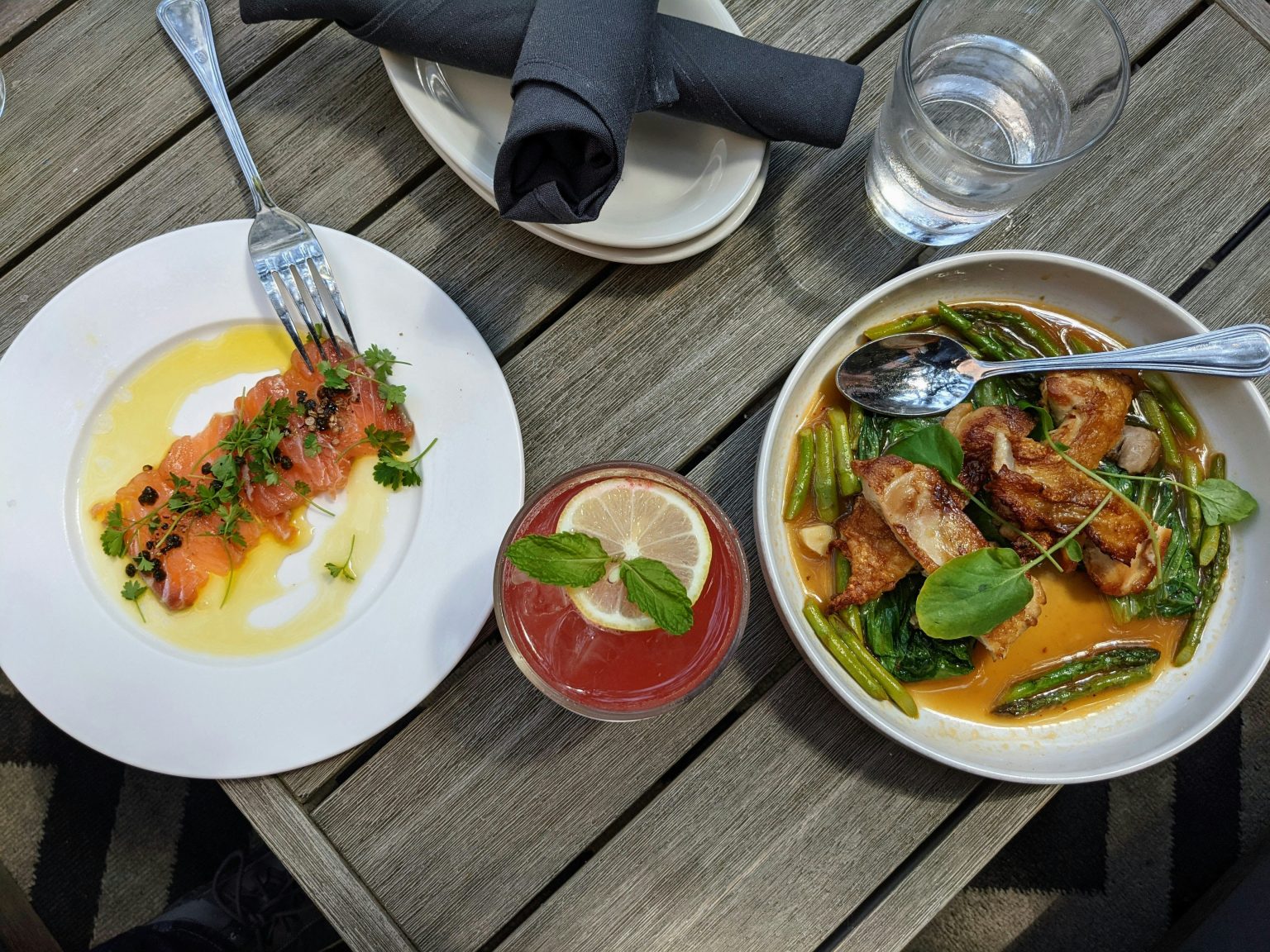
Photo by Lewis Guapo on Unsplash
Buy-one-get-one promotions are the restaurant industry’s favourite double-edged sword. They fill seats and empty inventory with equal efficiency. Yet for every coffee shop that turns BOGO into a customer acquisition engine, another watches margins evaporate. The difference is rarely luck. It is mathematics.
Understanding when a 1+1 promotion generates profit—and when it quietly bleeds money—requires more than intuition. It demands a clear-eyed look at margins, customer behaviour, and the often-overlooked concept of incremental sales. This analysis provides the formulas, frameworks, and real-world scenarios that separate strategic promotions from expensive mistakes.
Key Takeaways
- Margin threshold matters: with two identical portions a BOGO transaction breaks even at a 50% gross margin on the net price. That 50% covers the food cost of both portions and nothing else: packaging, card fees and any other per-transaction cost push the real threshold higher, to about 54.5% for the €4 coffee below. At a 45% margin every promotional transaction loses money.
- Incremental sales are everything: If existing customers simply shift their purchasing patterns rather than buying more, the promotion destroys value.
- Time-boxing prevents brand erosion: Promotions exceeding four weeks risk training customers to expect discounts permanently.
- High-margin items (coffee, alcohol, desserts) are ideal candidates; low-margin dishes (salads, main courses with expensive proteins) rarely survive the math.
Digital loyalty systems transform one-time promotions into measurable, data-driven strategies with trackable ROI.
The Core Mathematics: What 1+1 Actually Costs
A BOGO promotion is, in effect, a 50% discount when customers take both items. The fundamental question is whether your margins can absorb this while still generating profit per transaction.
The basic margin formula:
Gross margin (money) = Selling price − COGS
Gross margin (%) = (Selling price − COGS) / Selling price × 100%
Both are taken on the price net of VAT. Every threshold in this article is a margin on price. Markup on cost is a different number: markup = margin / (1 − margin), so a 50% margin is a 100% markup and an 80% margin is a 400% markup. Convert before applying any threshold below.
For a BOGO promotion, you must calculate the margin on the combined transaction: revenue from one item minus costs for two items.
BOGO transaction profit = Price − COGS(paid item) − COGS(free item) − other variable costs
The short form, Price × 1 − COGS × 2, holds only when both items cost the same to make and nothing else varies with the transaction. Usually something does: the second portion needs its own packaging and the sale carries a card fee. Our €4 coffee at €0.80 COGS, €0.15 of packaging per cup and a 1.5% card fee earns €2.99 at full price and €2.04 under BOGO, against the €2.40 the short form suggests.
Consider a coffee priced at €4 with a COGS of €0.80. Gross margin at full price: €3.20, or 80% of the price. Under BOGO: €4 of revenue minus €1.60 of cost equals €2.40 per transaction.
€2.40 is positive, and that is where most promotion math stops. The right comparison is the €3.20 the same transaction produced at full price. With no additional guests the promotion gives up €0.80 of gross profit on every transaction, 25% of the baseline. That figure is per transaction; the promotional transaction serves two cups.
For the simplest case there is a break-even volume: a free item identical to the paid one at the same cost, a baseline transaction holding exactly one of that item, no other per-transaction variable costs at all, a food-cost margin m above 50%, and nothing else changing. Then the promotion matches doing nothing only when transactions rise by a factor of m / (2m − 1) — ×1.33 at an 80% margin, ×1.5 at 75%, ×3 at 60%. At exactly 50% the transaction earns nothing and no volume rescues it.
Any per-transaction cost shifts that ratio, including a flat one: add €0.15 of packaging and the 1.5% card fee and the coffee moves from ×1.33 to ×1.47. What holds in every variant is the comparison itself — measure the promotion against the same period without it.
Now consider a salad at €12 with €8.50 in ingredient costs. Normal margin: €3.50 (29%). Under BOGO: €12 revenue minus €17 costs equals a €5 loss per transaction. The restaurant pays customers to take salads.
The break-even margin for BOGO on two identical portions is 50% of the net price. That 50% covers the food cost of the two portions and nothing else; packaging, fees and any other variable cost raise it, to about 54.5% for the coffee above. Below the threshold every promotional transaction generates a loss. Above it, the question becomes whether the extra volume justifies the margin compression.
If the free item costs less than the paid one, the break-even margin is r/(1+r), where r is the free item’s food cost divided by the paid item’s: exactly 33⅓% at half the cost, 42.9% at three quarters. These figures cover food cost only and assume no other variable costs; add packaging and fees and each moves up.
When 1+1 Promotions Generate Value
BOGO works under specific, identifiable conditions. Understanding these scenarios prevents the common mistake of applying promotions indiscriminately.
Customer Acquisition
When the primary goal is introducing new guests, BOGO functions as a marketing expense rather than a pricing strategy, and the test becomes payback rather than per-transaction profit. Payback runs on contribution, not on order value. A €25 average order at a 30% contribution margin returns €7.50 per visit, so a €5 acquisition loss clears on the first return; at a 10% contribution margin it returns €2.50 and needs two. Use your own contribution margin: an average order value cannot answer the question on its own, and neither can an annual visit count. The answer also depends on how many redemptions come from guests who would have returned anyway — if that share were half, the cost per genuinely new guest would be twice the simple figure. Measure that share against a baseline period instead of assuming it.
Dead Hour Activation
Restaurants face significant fixed costs regardless of traffic. A café empty between 2pm and 5pm still pays rent, utilities, and its scheduled staff, and a promotion restricted to these windows can turn zero-revenue hours into contributing ones.
What covers the rent is contribution: price minus every variable cost the transaction creates. A BOGO transaction contributes Price − 2 × COGS − packaging − fees. Where that number is negative the dead hour gets more expensive, not cheaper. A €12 salad at €8.50 COGS contributes −€5.00 per BOGO transaction before packaging and fees; ten such guests add €50 to the shortfall.
Dead-hour BOGO works on items whose contribution stays clearly positive, and only to the extent that the traffic is genuinely new rather than moved from 1pm.
High-Margin Product Categories
Beverages (particularly coffee, tea, and alcohol), desserts, and side dishes typically carry margins between 60% and 85%. These categories can sustain BOGO promotions while remaining profitable. A cocktail with a 75% margin retains 50% margin under BOGO—still healthier than many menu items at full price.
Inventory Management
Perishable items approaching expiration represent sunk costs. BOGO promotions on these items recover partial value rather than accepting total loss through waste. The alternative to selling two pastries at a slight profit is disposing of both at complete loss.
When 1+1 Promotions Destroy Value
The scenarios where BOGO fails share common characteristics: structural margin problems, cannibalisation of existing sales, or long-term brand damage.
Low-Margin Items
With two identical portions a BOGO breaks even at a 50% food-cost margin, so anything below that loses money on every transaction. The 50% covers food cost alone; packaging and fees raise it. Check your own costing: a €28 steak with €18 in costs carries a 36% margin, earns €10 at full price and loses €8 on every BOGO transaction.
Peak-Hour Promotions
Running BOGO during periods when your restaurant already operates at capacity creates pure cannibalisation. Customers who would have paid full price receive discounts. Queue times increase, potentially driving away full-price customers. The promotion displaces revenue rather than generating it.
Absence of Measurement Systems
Without robust tracking, restaurants cannot distinguish incremental sales from shifted sales. The kitchen sees increased orders; management assumes success. But if those orders came from Tuesday customers who simply waited until Wednesday’s promotion, the restaurant traded margin for the illusion of growth.
Extended Duration
Promotions lasting beyond four weeks transition from tactical tools to permanent price reductions in customer perception. Research consistently shows that extended discounting erodes willingness to pay at full price, creating a cycle where promotions become necessary to maintain baseline traffic.
Essential Metrics for Promotion Evaluation
Effective promotion management requires tracking specific indicators before, during, and after campaigns.
Return on Investment (ROI)
ROI = Δ profit / Investment × 100%
Δ profit is the profit of the promotional period minus the profit the same period would have produced without the promotion. Both figures already include every variable cost, the food cost of the free portions among them. Investment is what running the promotion cost: product and packaging for the free portions, plus promotion-specific spend such as design, print, ads or a campaign fee. Count each item once; the denominator sets the scale of the investment and is not a second deduction.
This ROI breaks even at 0%, not at 100%. An ROI of 50% means the promotion returned half as much again as it cost. Only a negative ROI means it cost more than it generated.
A worked example. The €4 coffee — net of VAT, €0.80 product, €0.15 packaging, 1.5% card fee — contributes €2.99 at full price and €2.04 under BOGO. A baseline month of 1,000 paid coffees earns €2,990. A promotional month of 1,500 BOGO transactions produces €3,060 of contribution, less €200 spent on design and local ads, leaving €2,860. Δ profit = €2,860 − €2,990 = −€130. Investment = 1,500 × (€0.80 + €0.15) = €1,425 of free portions plus €200 of spend = €1,625. ROI = −€130 / €1,625 = −8%. Transactions rose by half and the promotion still destroyed value.
Do not read this threshold as a ROAS. ROAS normally means attributed revenue divided by ad spend: revenue your analytics credits to the campaign, and revenue rather than profit. Incremental ROAS is a separate and stricter measure, and estimating it takes a causal method — a holdout, a geo test and a switchback are three of the available options. The rule that break-even ROAS equals 1 / contribution margin holds only where that margin is stated explicitly, measured before ad spend and after every other variable cost, and where the revenue in the numerator is genuinely incremental. Attributed revenue can overstate or understate the incremental figure depending on the attribution model and the channel mix, so the direction of the error is not known in advance.
Average Order Value (AOV)
BOGO promotions should ideally increase AOV by encouraging customers to purchase complementary items alongside the promotional offer. If AOV declines during promotions, customers may be substituting the BOGO offer for items they would otherwise have purchased—a clear warning sign.
Incremental Sales Ratio
This metric isolates true promotional impact by comparing period-over-period sales growth against baseline trends. If your restaurant typically sees 5% weekly variation, a promotional week must exceed this threshold significantly to demonstrate genuine incrementality.
Strategic Implementation Framework
Converting these insights into operational practice requires systematic processes.
- Product Selection: limit same-item BOGO to products with a documented food-cost margin above 50% of the net price, remembering that the 50% covers the food cost of the two portions and that packaging and fees raise the working threshold to about 54.5% for the coffee above. With a cheaper giveaway the break-even margin is r/(1+r) on food cost only, with no other variable costs assumed: exactly 33⅓% when the free item costs half the paid one, 42.9% at three quarters.
- Time Restriction: Define specific promotional windows—ideally during documented low-traffic periods. Avoid weekends and meal rush hours unless customer acquisition is the explicit, budgeted goal.
- Duration Limits: Cap promotional periods at 2–4 weeks. Longer campaigns require explicit justification and monitoring for brand perception shifts.
- Measurement Infrastructure: Implement digital loyalty systems that track customer behaviour at the individual level. This enables calculation of true incrementality rather than aggregate volume changes.
- Alternative Mechanics: Consider cashback programmes or loyalty points instead of direct discounts. These mechanics encourage return visits while preserving full-price transactions in the current visit.
The Technology Factor: Digital Loyalty as Promotion Infrastructure
Modern loyalty platforms transform promotion management from intuition-based decisions to data-driven strategy. Systems like Eatery Club’s loyalty module enable restaurants to configure promotions with precision: specific products, time windows, customer segments, and automatic tracking of results.
The “Piggy Bank” feature exemplifies sophisticated promotional mechanics—customers accumulate progress toward rewards through repeat purchases of specific items, encouraging return visits without immediate margin sacrifice. A customer buying nine coffees at full price before receiving the tenth free represents fundamentally different economics than BOGO: 90% of revenue captured versus 50%.
Digital systems also enable A/B testing of promotional mechanics, customer segmentation for targeted offers, and real-time adjustment based on performance data. The marginal cost of this precision approaches zero once infrastructure is established.
BOGO promotions occupy a specific, limited space in effective restaurant marketing. They work when margins can absorb the discount, when timing targets incremental traffic, and when measurement systems capture true impact. They fail when applied indiscriminately, extended indefinitely, or deployed without the infrastructure to learn from results.
The restaurants that extract consistent value from promotional mechanics share a common trait: they treat promotions as measurable investments rather than hopeful gestures. In an industry where margins determine survival, this mathematical discipline separates sustainable operations from businesses slowly subsidising their own decline.
Published in
Platon Sobko
News Editor at Eatery Club. I write about technology, software, the internet, and science
All stories by this author →