How Restaurants Became Social Again in 2025
Resy data reveals 2025 dining trends: 72% prefer group ordering


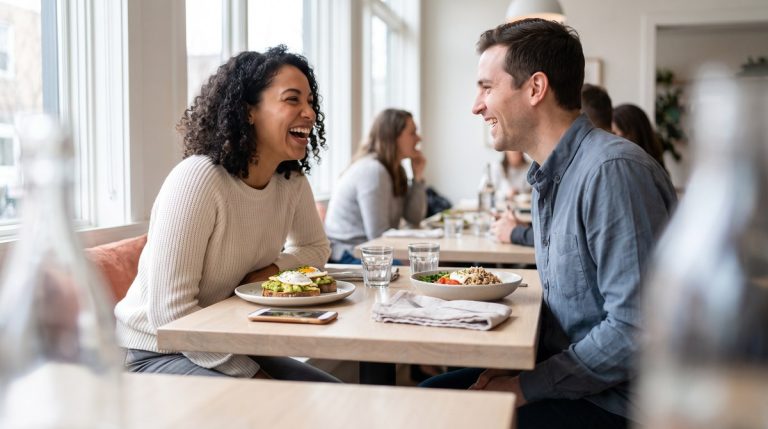
Photo by Melody Zimmerman on Unsplash
Something shifted in American dining this year. After years of takeout containers and solo meals at home, restaurants reclaimed their role as gathering places—and the numbers prove it.
According to Resy’s year-end data, 2025 was the year of “connected dining.” The reservation platform’s analysis reveals a pattern: people aren’t just eating out more—they’re eating differently.
Take the “table captain” phenomenon. Almost three-quarters of diners now prefer bringing along someone who knows the restaurant inside and out—the friend who’ll order for the whole group, navigate the menu, and remember who’s allergic to shellfish. It’s dining by delegation, and it works: 60% say it improves the entire experience.
Sharing has become the default. Steve Wong, who runs several New York spots including Place des Fêtes, puts it simply: younger diners want variety and discovery. His crispy maitake mushrooms became one of 2025’s most-ordered dishes precisely because they’re designed to pass around the table. Same with the lamb wraps at Miami’s Tâm Tâm or the tahdig at LA’s Kismet—these aren’t meals, they’re conversation starters.
The communal table trend tells an even starker story. Ninety percent of Gen Z diners actively enjoy sitting with strangers, compared to just 60% of Baby Boomers. For younger guests, the awkwardness is the point—restaurants are becoming places to meet people, not just feed yourself.
Timing has changed too. More Americans now dine between 5 and 6 PM than during the entire three-hour window from 8 to 11 PM. Four o’clock reservations are becoming normal. Nearly half cite crowd avoidance; others just want their evening back.
Behind the scenes, restaurants fought a different battle: the reservation black market. During the pandemic, bots and scalpers grabbed tables and resold them at markup. This year, New York and Florida cracked down with legislation, and the results were immediate. New York saw a 90% drop in bot-driven no-shows after Governor Hochul’s anti-piracy law took effect. One operator who’d faced 25% no-show rates now focuses on actual guests instead of ghost reservations.
Technology played both sides—restaurants adopted better systems to coordinate kitchen and dining room, while guests set alerts to snag tables the second they dropped.
Looking ahead, Resy spots new trends taking shape: tableside martini carts at French hotspots, mortadella appearing on menus nationwide, and Cambodian, Lao, and Hmong cuisines finally getting recognition. Even martinis are shrinking—two-sip “tiny ‘tinis” are showing up from Charleston to Nashville.
The common thread? Intentionality. Whether it’s a carefully orchestrated group order, a 5 PM reservation to beat the rush, or laws preventing table scalping, 2025’s dining culture favored deliberate connection over convenience. Restaurants aren’t just serving food anymore—they’re serving community.
Published in
Pauline Shevchenko
News Writer at Eatery Club. I love games and contemporary art. I mostly write about technology, the HoReCa industry, and AI.
All stories by this author →