Restaurant AI search: what the data shows
AI Overviews are associated with fewer clicks, but branded searches show a different pattern. What the studies tell restaurant owners, and what ChatGPT visibility scores leave unclear.

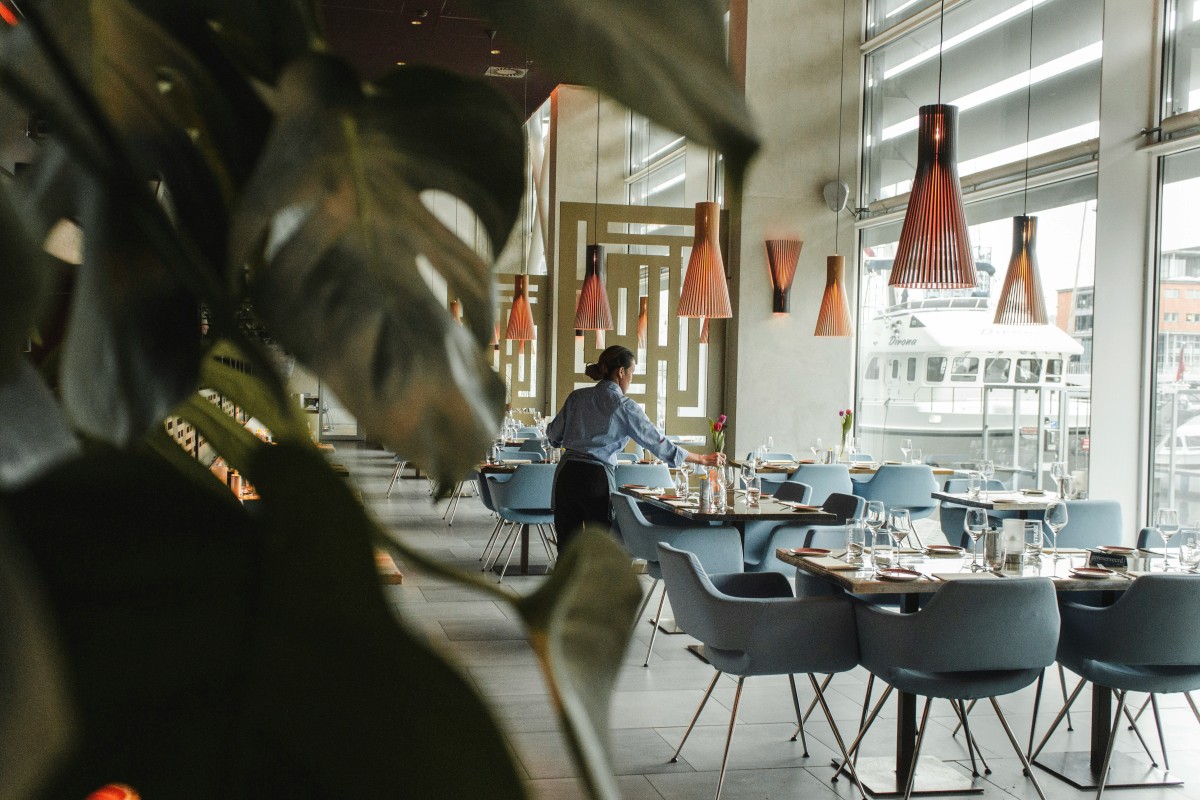
Photo by Louis Hansel on Unsplash
Loading audio…
—:—
A dashboard vendor lands in a café owner’s inbox with a chart showing traffic losses attributed to AI and offers to track “visibility in ChatGPT.” The chart may be accurate, but it does not validate a promise to measure a permanent position in ChatGPT answers. The topic of restaurant AI search splits into two questions: whether such a ranking exists, and how many Google clicks a website loses to AI Overviews. I work in restaurant tech and see this in practice.
Why there is no single AI search ranking
ChatGPT can give two people different answers to the same question. Often it doesn’t search the web at all: it assembles an answer from training data reflecting the internet a year or two ago and delivers it with the confidence of fresh research. A single ChatGPT answer cannot be treated as a permanent “ChatGPT ranking.”
The services draw on different sources. When ChatGPT searches, it relies on Bing, with roughly 87% of its citations tracing back to Bing’s top results. Perplexity searches afresh for every query and favors recent material, citing content under 30 days old at an 82% rate. Google AI Mode uses its own index, but its citations differ from ordinary Google results: semantic overlap is near 86%, while URL overlap is around 14%.
A top ranking in Perplexity tells you nothing about a ranking in Google AI Mode. A dashboard that combines these services into one “AI visibility score” adds up incomparable measures. You can observe individual answers, but they do not establish a single permanent ranking. Selling that unverifiable ranking is the hype around AI search. This does not mean AI search is irrelevant: the studies below document lost clicks.
What the click studies show
Google’s AI Overview appears above search results and often answers a question before someone visits a website. For queries with an AI Overview, Ahrefs measured a decline in click-through rate for the first organic position of 34.5% in spring 2025 and 58% by December, across 300,000 keywords in Google Search Console. Seer Interactive reported a 61% year-over-year drop for AI Overview queries. The samples differ, but both show declines. In Ahrefs’ data, the loss grew from spring to December.
Pew Research tracked the browsing behavior of 900 U.S. adults in March 2025 and published its report that July. Users clicked a traditional result 8% of the time when an AI summary appeared, compared with 15% without one. Links inside the AI answer received clicks 1% of the time. Sessions ended on the results page in 26% of cases with an AI summary, compared with 16% on ordinary results pages. Google criticized Pew’s methodology, but the other click studies cited here point in the same direction.
Which restaurant searches are more exposed
The claim that restaurants are the worst-hit vertical gets repeated a lot, including in my own earlier notes. Here I’ll correct myself. It is only partly true: restaurants were among the leaders in AI Overview coverage growth after the March core update. But summary coverage does not show which industry lost the most traffic. For restaurants, lost clicks are concentrated in long-tail informational searches, not every search for a venue.
Searches such as “best ramen in the neighborhood” or “where to eat vegan brunch with outdoor seating” face a higher risk of lost clicks. They help people choose where to go, and an AI answer can address that need on the results page. Short local searches and searches for a specific restaurant, such as “pizza near me” or “[your restaurant] reservation,” express intent to act: the person is ready to go or book.
Pew found that searches of one or two words triggered an AI summary about 8% of the time, compared with 53% for searches of ten words or more. Those figures are grouped by query length, not by types of local intent. I read this as a reason to consider short local and navigational searches less exposed, not immune to lost clicks.
AI can answer discovery queries on the results page, while searches for a particular venue’s name, address, or reservations still bring clicks. That distinction should reorder your priorities.
How branded searches differ
In Amsive’s study of 700,000 keywords, AI Overviews appeared on only 4.79% of branded queries, and CTR was 18.68% higher when they appeared. That association differs from the broader pattern of declining click-through rates.
The Amsive findings favor working on your own brand over fighting for category rankings. For a category query such as “Italian near me,” an AI summary can replace a website visit; for a search by your restaurant’s name, it can point people to you. The study shows an association between AI Overviews and branded CTR, without establishing causation or showing that branding fully protects clicks.
Why AEO is not a single task
“Optimize for AI” does not specify an action until it names a service. Bing matters for ChatGPT’s search-based answers, freshness matters for Perplexity, and Google AI Mode selects URLs differently from ordinary search. These differences cannot be addressed with a single setting.
I call the work these services have in common basic hygiene, not “AI magic”; that is the subject of the next piece.
Disclosure: I’m a product owner at a restaurant platform. Structured data and listings are part of what we build, so it irritates me when basic hygiene is sold as “AI magic.” I have a professional interest here, and I still advise against buying a dashboard that promises a single permanent ChatGPT ranking.
Published in
Anton Galiukin
Product Owner at Eatery Club. I specialise in digital innovation and product development. I write about technology and the HoReCa industry.
All stories by this author →